IFFI 2024

The closer the graph between cinema and literature, the better Indian cinema will be” – Acclaimed Filmmaker Mani Ratnam at 55th IFFI


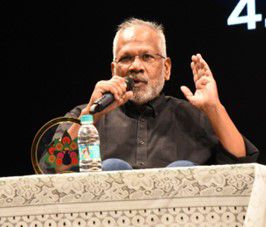
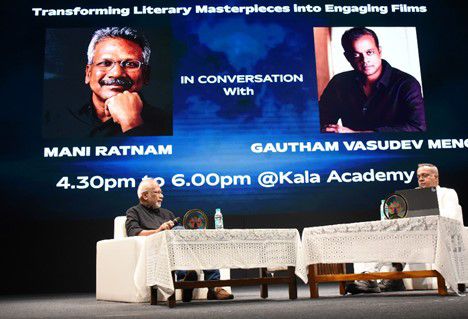
Legendary filmmaker Mani Ratnam captivated audiences at a Masterclass on “Transforming Literary Masterpieces into Engaging Films” during the 55th International Film Festival of India (IFFI). In an insightful conversation with another renowned Indian film director Gautham V. Menon, Ratnam delved into the art of adapting literature into cinema, offering valuable advices for filmmakers and cinephiles alike.


“I am still a person sitting in the audience,” Ratnam humbly remarked, reflecting his lifelong curiosity and passion for storytelling. Despite being a maestro of filmmaking, he stated, “In many ways, I still feel like a beginner.”


Mani Ratnam highlighted the deep connection between cinema and literature, asserting that “the closer the graph between cinema and literature, the better Indian cinema will be.” He emphasized that filmmakers must hone the delicate art of transforming written words into compelling visual narratives.


Bringing Literature to Life on Screen

Discussing the nuances of adapting books into films, Ratnam explained, “Films are a visual medium, while books are mainly imaginative. A filmmaker must be extra cautious in bringing a reader’s imagination to life.” He noted that while scripts may need adjustments, these changes should enhance the story rather than alter its core essence.

Mani Ratnam also shared how mythology and ancient Indian history have influenced his perspective, enabling him to approach characters in unique ways. He commented on the challenges of adapting flowery literary language into a cinematic script, while still ensuring actors can perform naturally with the script.


Discussing about his recent magnum opus ‘Ponniyin Selvan’, which is adapted from Kalki Krishnamurthy’s iconic 1955 novel by the same name, Mani Ratnam shed light on how the film had to depict the Chola period but all the remnants of that period in Tanjavur were already lost to time. As he did not want to  create elaborate sets, he took the liberty of shooting the movie in the north of India and converted the architecture there to make it resemble  architecture of the Cholas.


Films as a Collaborative Art

Underlining the collaborative nature of cinema, Ratnam remarked, “As a director, my job is to bring every person in the film, be it an actor or a crew member- to a focal point together.”
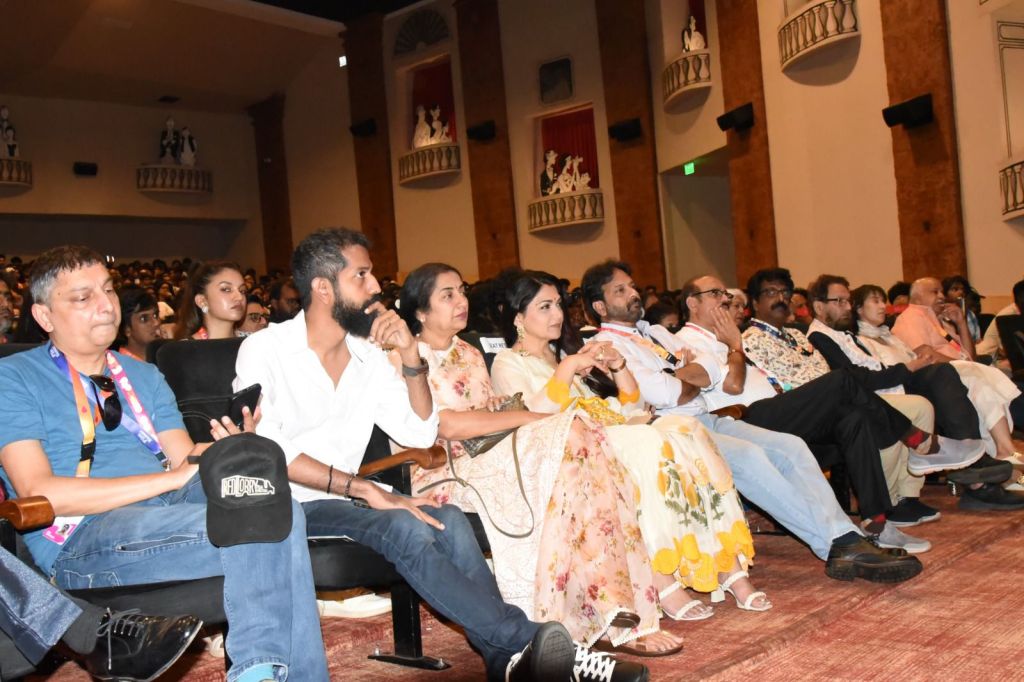


The Masterclass provided an enriching experience to the audience, with Ratnam urging young filmmakers to take creative liberties thoughtfully. He also asked them to preserve the original spirit of a book while giving it their unique creative spin for adaptations.
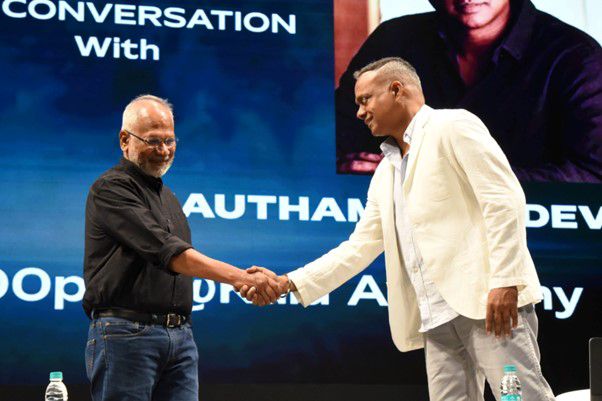


This Masterclass was a testament to the filmmaker’s mastery and humility, and offered great valuable lessons to all the aspiring storytellers in the audience on how to bridge the two worlds of literature and cinema.

IFFI 2024

‘Entertain-Educate-Elevate: The Principle of 3E’s we follow in VCF’ – Vidhu Vinod Chopra‘I don’t trust a director, I trust a human being’: Vidhu‘Vinod doesn’t know where he wants to go – but he certainly knows where he doesn’t want to stand’: Shantanu Moitra


In Day 3 of 55th IFFI, Shri Shantanu Moitra, eminent music director, jammed with Shri Vidhu Vinod Chopra, film director, producer and script writer in a vibrant way today here in Kala Academy, Panjim, Goa and created a true illustrious masterclass session on ‘Living Movies: Filmmaking and the Creative Life’ for the packed house.


Shri Moitra began the session with his famous ‘Piyu Bole Piya Bole’ song from the movie ‘Parineeta’ and Shri Chopra joined him in no time. Breaking the established pattern of such masterclass conversations, as he has repeatedly done through his movies, Shri Chopra immediately stood up from the comfort of his sofa and kept the entire audience engaged with his vibrant energy throughout for rest of the session.

Recollecting his zero moment, Shri Chopra narrated the story of his dream to assist Vijay Anand, in his early days. Someone close to Mr. Anand assured him that he will confirm the possible association with Anand. That promise kept him waiting for months; but the letter did not arrive ever.


Shri Chopra explained how, with his first film ‘Khamosh’ made with the financial assistance from NFDC, he faced challenges to market the movie and repay NFDC. As per NFDC policy, if he failed to do so, there would be no assistance for the next venture. Eminent directors, distributors praised the film, but again the phone did not ring with the good news. Finally, he himself had to be the distributor of the film.

Taking que from these stories, Shri Moitra fondly recollected: “During ‘Parineeta’ there was doubt with the possibility of the music getting popular, especially considering the then existing trends in the industry. But Vidhu being himself who never received the letter, or got that call, signed me for next three VCF ventures; even before the success or failure; and that’s what defines Vidhu Vinod Chopra.”

Shri Moitra also highlighted how tough a taskmaster Shri Chopra is. While characterising Shri Chopra for the audience, he commented, ‘Vinod doesn’t know where he wants to go – but he certainly knows where he doesn’t want to stand’. Shri Moitra did not miss the chance to point out, on a lighter note, how this trait makes his life and that of others who are working with Shri Chopra, miserable.

On the topic whether understanding business prospective is essential for budding filmmakers or not, Shri Chopra firmly stated his disapproval. “I only make a film that I am believing in” and he concluded by saying “Entertain-Educate-Elevate: The Principle of 3E’s we follow in VCF.”

On his relations with the film director when he himself produces the film, Mr. Chopra said, ”I don’t trust a director, I trust a human being.”

The session witnessed the jovial, musical and engaging Vidhu Vinod Chopra and Shantanu Moitra together setting a live demonstration of the life philosophy which is also depicted through their cinema: “Don’t be a bore; Only entertain.”

IFFI 2024

From Tashkent to Belgrade: 55th IFFI Celebrates Stories that Transcend Borders and Cultures


The 55th International Film Festival of India (IFFI) proudly showcases three exceptional films from Uzbekistan, Estonia, and Serbia. These cinematic gems, crafted by visionary directors and producers, explore themes of resilience, self-discovery, and the indomitable human spirit, inviting audiences on a journey through diverse cultural landscapes.


Among the highlights is The Song Sustxotin, a poignant tale set in a drought-stricken Uzbek village. Directed by the internationally acclaimed Khusnora Rozmatova, the film portrays a community’s battle against nature’s fury and societal despair. Honored with the “For Humanism” award at the Kazan International Muslim Film Festival, Rozmatova has delievered a compelling second feature, showcasing her unwavering commitment to humanistic storytelling.

Adding to the showcase is House, a moving narrative from Uzbekistan directed by Jamshid Narzikulov. The story follows a grieving widow who loses her only son to a reckless online challenge. Her pursuit of justice leads her from a quiet village to the chaos of a sprawling metropolis, where she faces harsh realities while rediscovering her strength and values. This debut feature highlights Narzikulov’s nuanced storytelling, blending personal tragedy with transformative self-discovery.


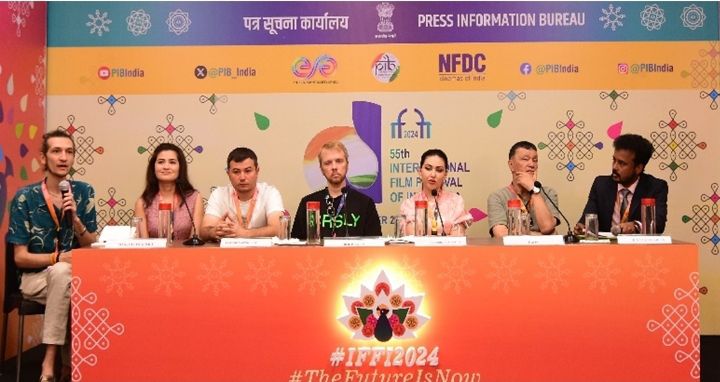
From Estonia and Serbia comes Deaf Lovers directed by Boris Guts, a renowned Russian experimental film maker. A contemporary tale set in Istanbul, the film follows Sonya, a Ukrainian, and Danya, a Russian, as they navigate the challenges of survival in a foreign city, grappling with shared struggles and aspirations. Their journey explores themes of identity, resilience, and the pursuit of a shared future amid turbulent pasts. Guts brings his fearless approach to critical issues like poverty, racism, and terminal illness, infusing this international premiere with his signature depth and vision to the film.


While addressing the press conference, Boris Guts underscored the significance of cinema as a strong Language that has power to bridges divides even in the war-stricken landscapes.

Karim, an award-winning film director, while responding to the audience question, emphasized on the role of cinema to unite people across borders and heal differences and bring humanity closer through shared stories.

The Directors also emphasized on the role of cinema in “building a better tomorrow”.


Together, these films showcase the universal power of cinema to transcend borders, connect cultures, and delve into the complexities of the human condition. With their unique storytelling, profound narratives, and artistic brilliance, they promise to leave an indelible mark on audiences at IFFI 2024.