
Author : Dt. Wellishia D’sa
 Hey Guys!
Hope you are doing fine! We are back with the #BeingAllycaralTuesdayTips – This time speaking about the Holy Ramandan.
The holy month of Ramadan is the ninth month of the Islamic calendar and a time when many Muslims across the world fast during daylight hours for 29-30 days. The biggest challenge for Muslims this year will undoubtedly be during the Eid al-Fitr celebrations that mark the end of
Ramadan in late May. This is when followers gather in large numbers for festivals and parties. This Eid al- Fitr will be different just as our lives which has taken a drastic change with the Invasion of Covid_19. Different countries have diverse cultural variations on some aspects of Eid al-Fitr, but the overriding sentiment is one of community and togetherness. As we all are aware, Muslims taking part in Ramadan do not eat or drink anything during daylight hours, eating one meal (the ‘suhoor’ or ‘sehri’) just before dawn and another (the ‘iftar’) after sunset. The end of Ramadan is marked by ‘Eid-ul-Fitr’, the Festival of the Breaking of the Fast. A special celebratory meal is eaten during the festival, the first daytime meal for a month. So, I’ll break down into two parts for healthy food choices during these remaining days of Ramadan fasting and secondly healthy tips to consider on Eid-ul-Fitr.
I. What to eat and drink at Iftar and Suhoor
Iftar
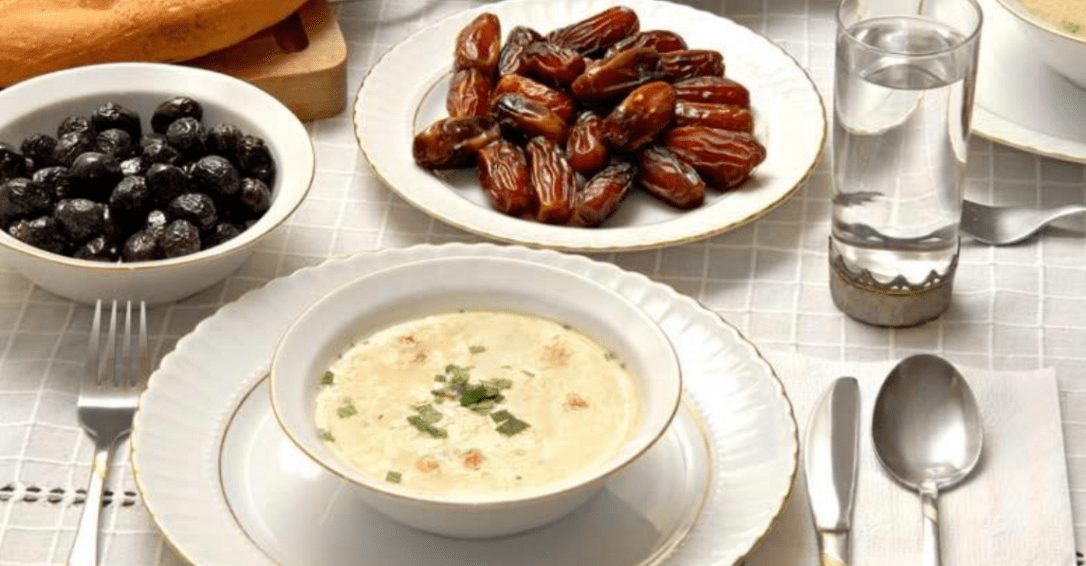
When first breaking the fast go for plenty of fluids, low fat, fluid-rich foods and foods containing some natural sugars for energy (avoid consuming a lot of foods or drinks with added sugars). Below are some examples:
Drinks – water, milk, fruit juices or smoothies – water provides hydration without any extra calories or added sugars. Drinks based on milk and fruit provide some natural sugars and nutrients – these are also good to break the fast but avoid drinking a lot of drinks with added
sugars after breaking the fast as these can provide too much sugars and calories.
Dried Fruits – Eating three dates to break your fast is a traditional and healthy way to begin iftar. Dates are an excellent source of fibre. You could also try other dried fruits such as apricots, figs, raisins or prunes, which also provide fibre and nutrients. They all provide
minerals like potassium, copper and manganese which is beneficial for sound health.
Fruit – a traditional way to break the fast in South Asian cultures, fruit provides natural sugars for energy, fluid and some vitamins and minerals. Opt for locally available seasonal fruits. Soup – traditional in many Arab countries, is a light way to break the fast and provides fluid.
Traditional soups are based on a meat broth and often contain pulses, like lentils and beans, and starchy foods like pasta or grains, providing nutrients and energy.
Balance Meals – Meals vary between different cultures and traditions but try to make sure the foods you eat provide a balance of starchy foods, including whole grains where you can, fruit and vegetables, dairy foods and protein-rich foods like meat, fish, eggs and beans. For example, you could have a range of curries including fish, meat, vegetables and pulses, served with rice, chapattis and yogurt, and this would include all of the key food groups that’s nutritionally required.
Exercise – If you can, once you have had a chance, you could try doing some light exercise such as going for a walk.
Suhoor
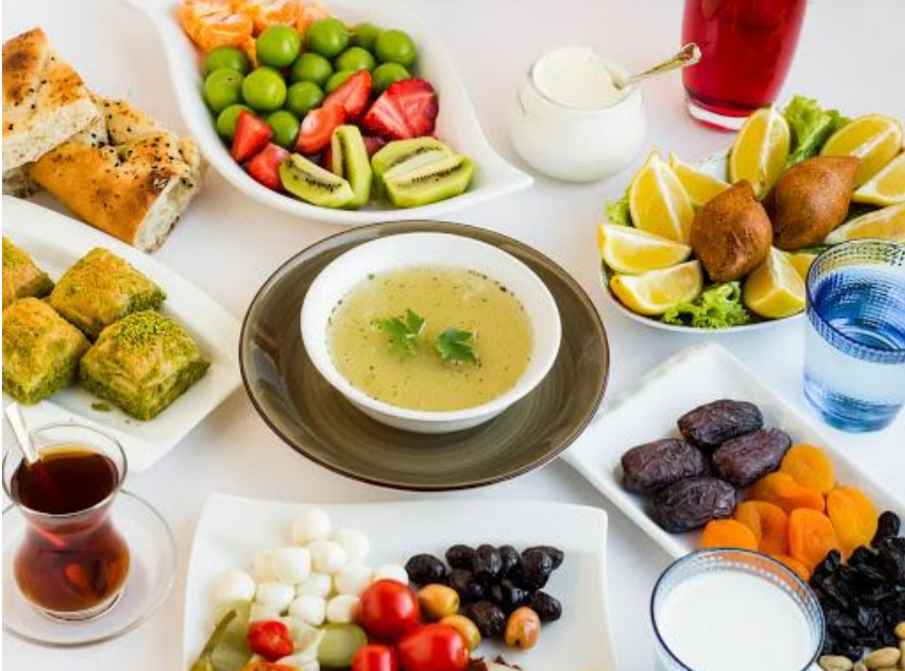
Drink plenty of fluids choose fluidn – rich foods to make sure you are well hydrated for the day ahead. You can also increase water intake by eating hydrating foods. Try adding watermelon to your suhoor meal. Green salad contains plenty of hydrating cucumber and tomato. Avoid caffeinated drinks such as coffee, tea and cola, because caffeine can make some people urinate more often, which may lead to dehydration. Also remember that fizzy drinks with sugar will add calories to your diet. Foods rich in water may be served, such as soup or fresh vegetable salad.
Oats and whole grain cereals – these are wholegrains and you could choose porridge, which will also provide fluids as it’s made with milk or water, muesli with milk or yogurt or overnight oats. You could experiment with fresh or dried fruit, nuts or seeds as toppings. Because they are consumed with milk, you also get fluid and nutrients like calcium, iodine and b vitamins from the milk.
Starchy food like Rice, or Sweet Potato – you could try rice pudding with fruit or experiment with other grains like rice flake, boiled sweet potato with dahi & fruits. If you go for savoury dishes at suhoor then it’s a good idea make sure these are not too salty or they may make you very thirsty during the fast. Choosing high fibre or wholegrain varieties where possible as these can help keep you feeling fuller and can aid digestion, helping to prevent constipation.
Breads – go for wholegrain options as these provide more fibre, for example wholemeal toast or chapattis. Avoid combining bread with salty foods like hard cheese, or preserved meats. You could try nut butters (without added salt), soft cheese, or banana. As bread is fairly dry, make sure you drink plenty of water or other fluids alongside or you could have fluid-rich foods such as a lentil soup, which is a traditional food at suhoor in some countries.
Yogurt / Curd – this can be a good food to include at suhoor as it provides nutrients like protein, calcium, iodine and b vitamins and also contains fluid. You could combine it with cereal and fruit as in the examples above.
Lean Protein – Enjoy grilled or baked lean meat, skinless chicken and fish, to get a good portion of healthy protein. In general, avoid fried and processed foods high in fat or sugar. Include Bean, Peas other pulses which also compromises to a healthy protein foods.
Example of an iftar meal
Home-made vegetable soup (not from soup-powder)
Green salad, or other vegetable salad of choice
Stuffed vegetables (Capsicum/ Brinjal/ Okra)
Baked chicken breast
Drink plenty of water; lemon slices and mint leaves can be added to enhance the taste.
Example of a suhoor meal
2 slices of bread
Vegetable omelette or hard-boiled egg
Sliced vegetables from two vegetables (tomato & cucumber)
Chickpea Hummus or Boiled Lobia Chaat
Herbal tea
Don’t forget to drink an adequate amount of water.
 II. Health tips for Eid al-Fitr
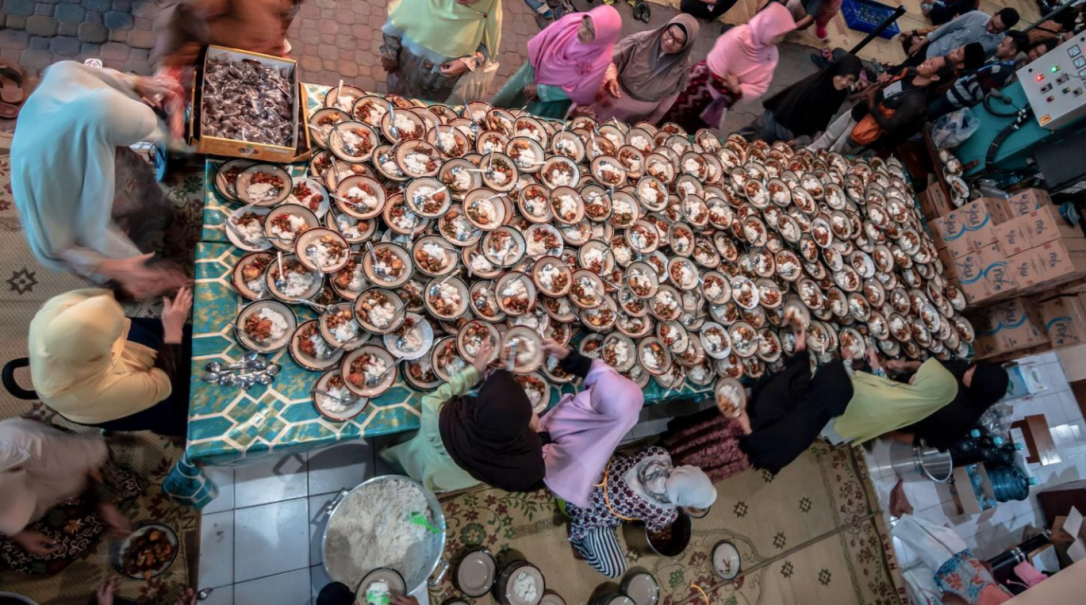
Few days of Ramadan remain, and then come Eid al-Fitr, this happy religious occasion which is usually linked with GIT problems such as; gastroenteritis, gastritis, vomiting, diarrhea, etc. so we will discuss important health tips to avoid these nasty health issues.
1. As we know, the stomach is prepared to be empty during the first hours of the morning in Ramadan. So it’s advised to eat an odd number of dates (according to the Sunnah of the Prophet) before going to the Eid prayer. This will help stomach for adaptation of the new situation after Ramadan and will enhance secretion of digestive enzymes, which will be very helpful and effective in avoiding digestive problems.
2. Making cakes and biscuits in Eid al-Fitr is a traditional habit related to Eid al-Fitr. These delicious candy are high caloric and contain excessive amount of fat and sugar, so you should avoid overeating to be away of GIT problems which is caused mainly in the first days after
Ramadan due to over consumption or mal-use of this type of food.
3. As a Nutrition expert, we advise that the digestive system should be given sufficient time to return to its pre-Ramadan state. So, in the first days after Ramadan, we should avoid fatty foods and eat smooth light ones.
4. We should drink plenty amount of water and eat sufficient quantities of fresh fruits and vegetables to prepare the digestive system to return as previously.
5. God has ruled fasting as it includes several benefits to the human being and their health, so we suggest following the principles of fasting even without fasting, which means that you can eat any food you want but without over consumption

For any assistance on nutrition related query, feel free to connect on WhatsApp or call on 7559103666
In wellness vibes to you by,
Dt. Wellishia D’sa
(BSc. & PGD in Food, Nutrition & Dietetics)
Nutrition Consultant at LeanWell Nutrition & Certified Yoga Instructor
Disclaimer: This informs readers that the views, thoughts, and opinions expressed in the text belong solely to the author, and not necessarily to the organization, committee or other group or individual publishing it.
Discover more from Allycaral
Subscribe to get the latest posts sent to your email.

